Zone guide

Traps

Your upper traps run from the base of your skull out to your shoulders. They shape the slope between the two.

Traps frame the top of the V. Here's what they do, how the app estimates them, and four moves that train them.

What traps do for your V

From the front, your upper traps fill the line from your neck out to your shoulders. They also lift and steady your shoulder blades, which every press and pull relies on.

Shrugs train them directly. Carries train them by holding heavy weights up while you walk.

On the women's path, traps are a posture and safety zone: the app still measures them, but they don't count in the V-Taper Score and are never the weakest zone.

How the app measures it

The scan has no trap landmark. It estimates your traps from how wide your neck is compared with your shoulders, and from a photo taken about 2 m away that's one of its roughest readings.

Read the trap score over several scans, not one.

How the score works

Moves that build traps

Four of the 5 trap exercises in the app. In the app each one has a demo clip, and your plan sets the sets and reps for you.

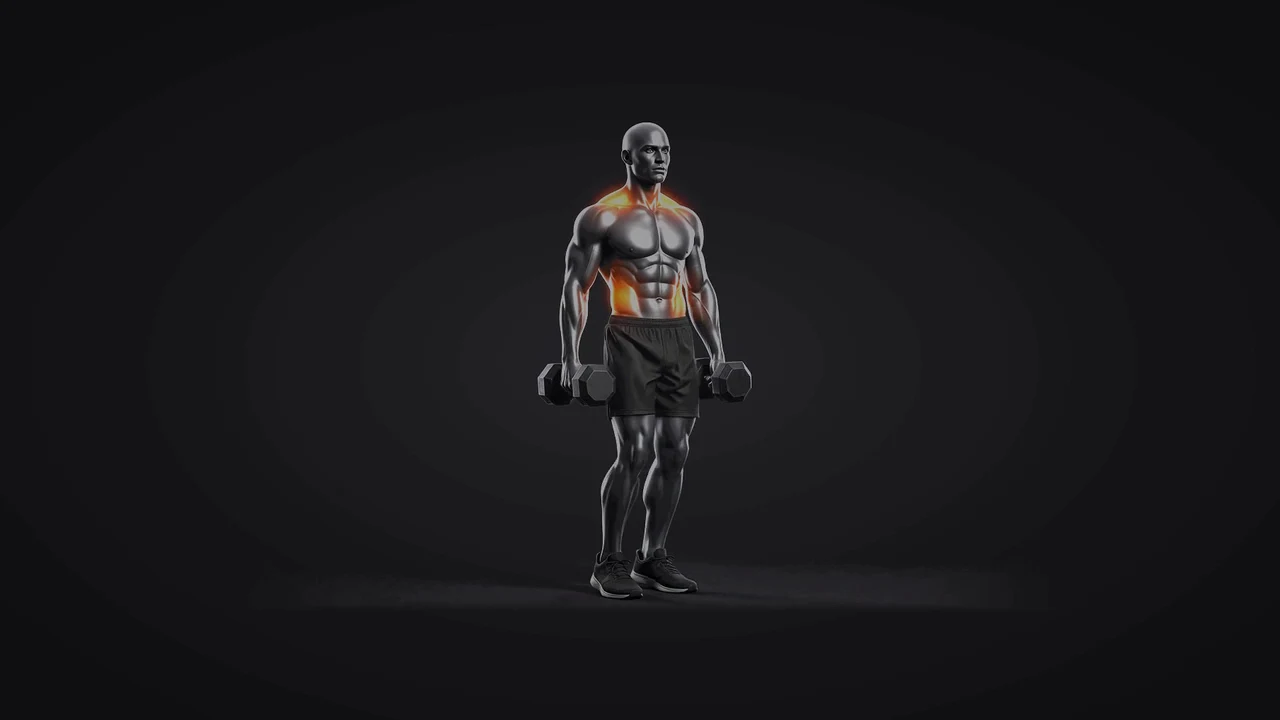
  • Demo still: dumbbell shrug.
    • Traps · Upper traps
    • Dumbbell
    • Home + gym

    Dumbbell shrug

    1. Stand tall, dumbbells at your sides.
    2. Lift your shoulders straight up toward your ears.
    3. Pause one second at the top.
    4. Lower slowly to a full stretch.
    Common mistakes
    • Rolling the shoulders.
    • Bending the elbows to help.
    • Pushing the head forward.

    Swap for: band shrug, barbell shrug, cable shrug, farmer carry.
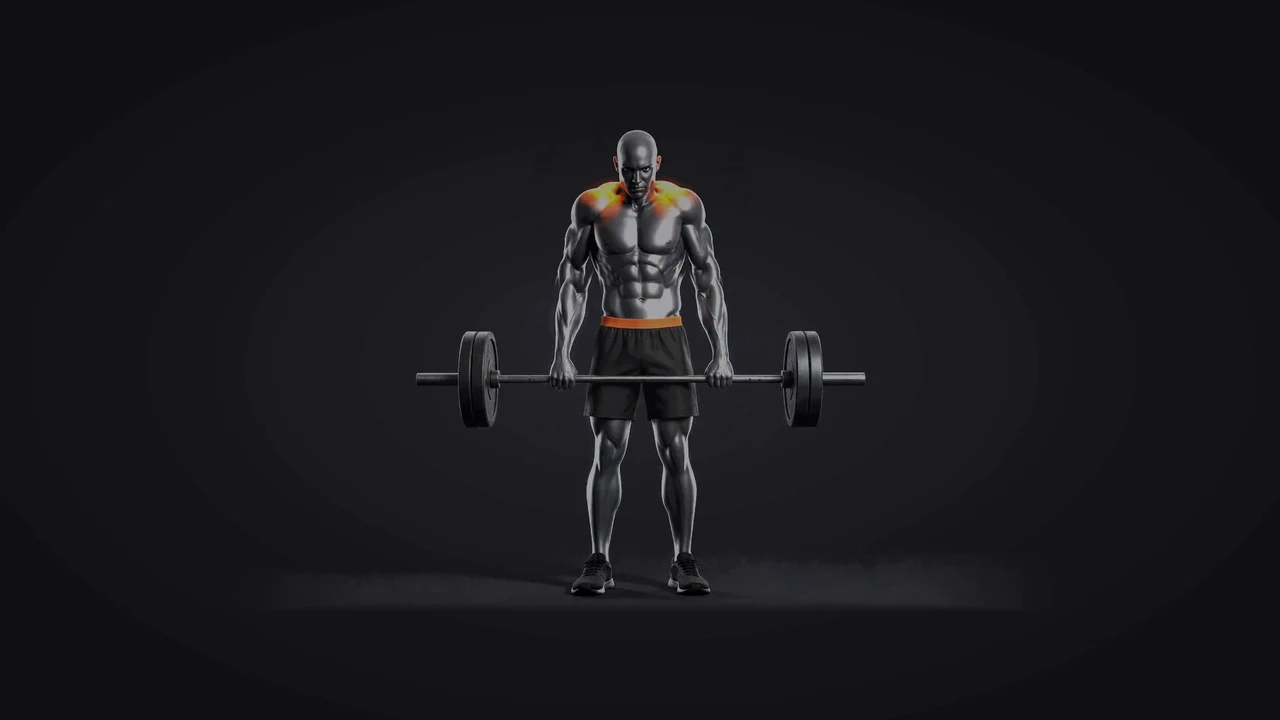
  • Demo still: barbell shrug.
    • Traps · Upper traps
    • Barbell
    • Gym

    Barbell shrug

    1. Hold the bar in front of your thighs, hands just outside your hips.
    2. Stand tall, arms straight.
    3. Lift your shoulders straight up and pause.
    4. Lower slowly.
    Common mistakes
    • Bouncing the bar with the legs.
    • Rolling the shoulders.

    Swap for: dumbbell shrug, cable shrug.

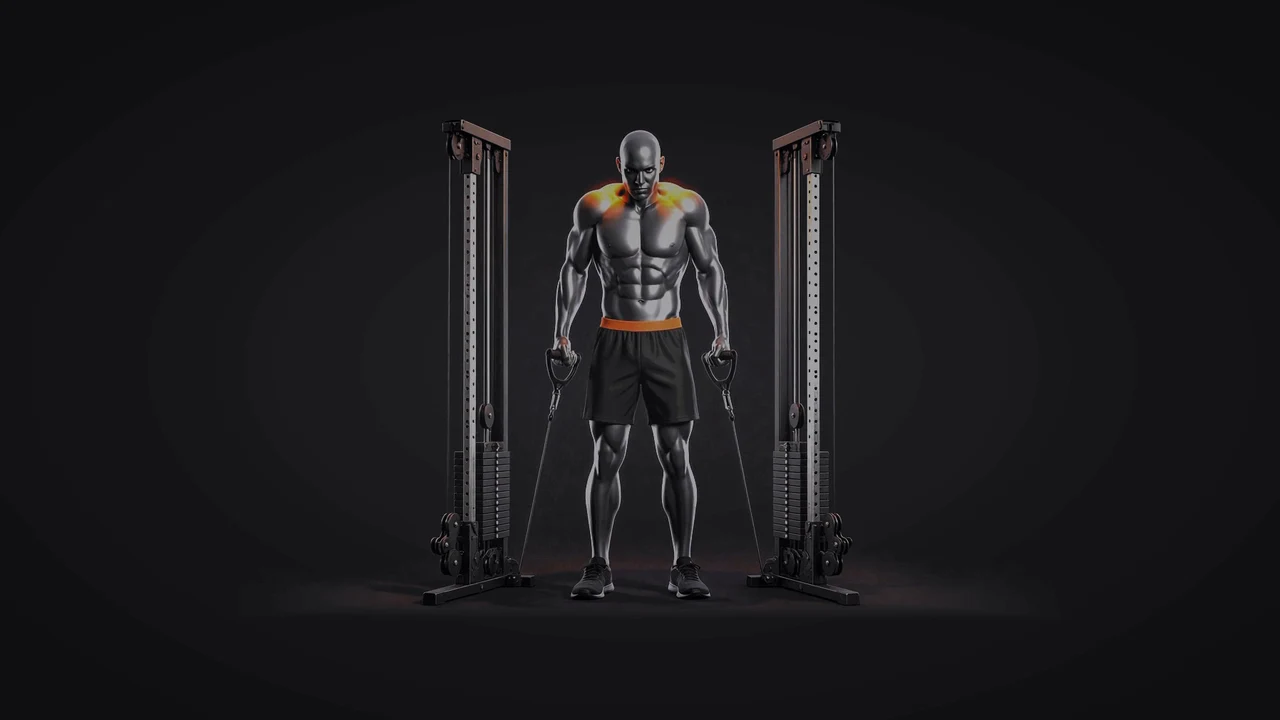
  • Demo still: cable shrug.
    • Traps · Upper traps
    • Cable
    • Gym

    Cable shrug

    1. Attach a straight bar to the low pulley and stand close, holding it at your thighs.
    2. Stand tall, arms straight.
    3. Shrug straight up and pause one second.
    4. Lower slowly.
    Common mistakes
    • Leaning back.
    • Pushing the head forward.

    Swap for: dumbbell shrug, barbell shrug.

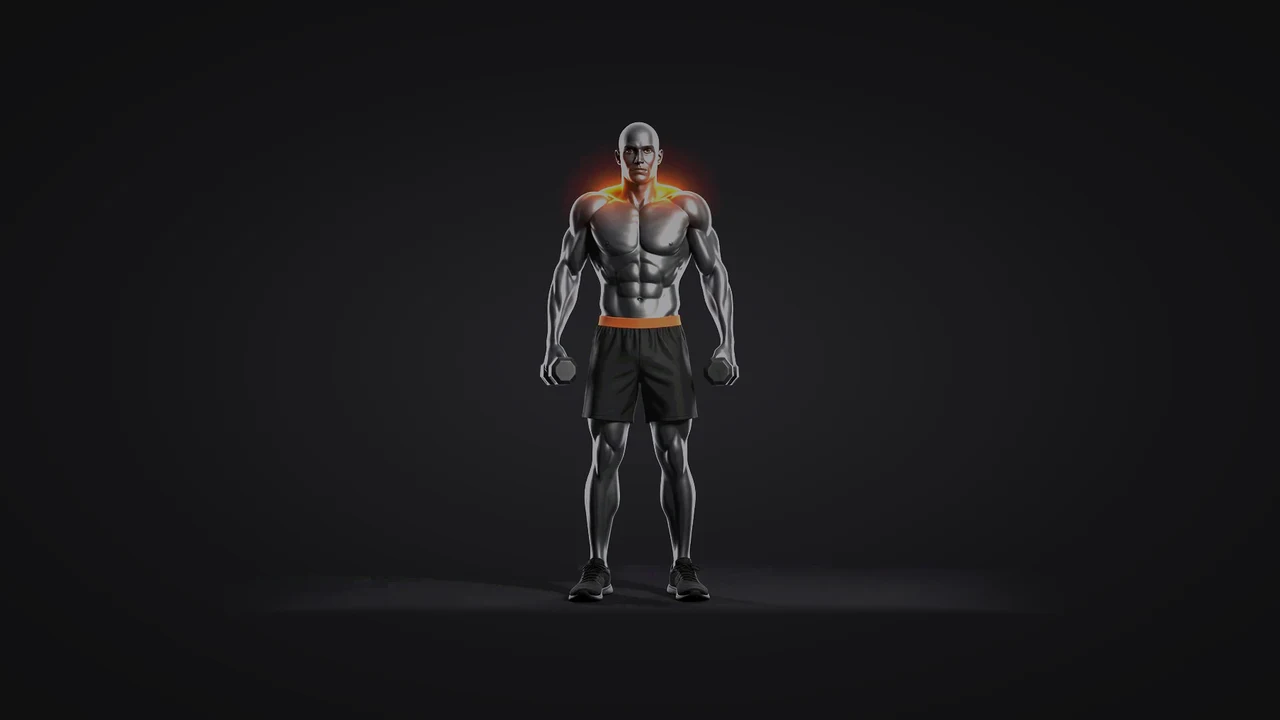
  • Demo still: farmer carry.
    • Traps · Upper traps
    • Dumbbell
    • Home + gym

    Farmer carry

    1. Pick up a heavy dumbbell or kettlebell in each hand.
    2. Stand tall, shoulders down and back, head level.
    3. Walk with short, steady steps. At home, walk back and forth or march on the spot.
    4. Breathe steadily the whole way, then set them down under control.
    Common mistakes
    • Shoulders rounding forward.
    • Leaning to one side.

    Swap for: dumbbell shrug, band shrug, barbell shrug.

No coach has checked these numbers yet

What 12 weeks can change

What published studies found, in plain numbers. They studied adult men, so read them as a rough guide, not a promise.

Trap growth

No study yet

We found no training study that measured upper-trap growth, so there's no honest number to give you.

Muscle, whole body

About 0.6 kg a month

Across 111 studies, mostly untrained men gained about 1.6 kg of lean mass in about 10 weeks of lifting. Expect less if you've trained for years.

Benito 2020, Int J Environ Res Public Health

Waist

1.0 to 1.2 cm per kg

The part that moves. Average and heavier men lost about 1.0 to 1.2 cm of waist for each kg of fat they lost.

Hunt 2014, Lancet · Foulis 2023, Front Physiol

So over 12 weeks, expect your waist to change before your traps show it. Muscle builds over several cycles.

If you're 16 or 17, the app sets no calorie deficit and shows no projections.

Read the full guide: what 12 weeks can change

Train traps safely

  • Shrug straight up toward your ears and lower slowly. Don't roll your shoulders or push your head forward.

  • Carries: stand tall, shoulders down and back, head level, and set the weights down under control.

  • Bars and cables: stand tall with straight arms, and don't bounce the weight with your legs.

  • Stop at any sharp pain, or numbness or tingling that spreads into your arm. Pain that keeps coming back is worth a physio's eyes.

General guidance, not medical advice.

Find your weakest zone in the app

Three photos measure your shoulders, waist and posture. Your 12-week plan starts with the zone that needs it most.

Coming soon to the App Store

iPhone · Ages 16+ · Scores are an AI estimate, not medical advice.