Zone guide

Neck

Neck size comes from direct neck work. General lifting doesn't grow it.

Here's what your neck does for your frame, how the app trains it safely, and six moves to start with. Under 18, neck work is holds and chin tucks only.

What your neck does for your frame

A thicker neck fills the space between your jaw and your traps, and balances wider shoulders.

The app starts every neck block with holds: you push against the floor or your own hand, and nothing moves. Hold times build slowly over the cycle, and the app pauses neck work if you report pain or a warning sign.

If you're 18 or over and your plan builds neck size, the app can add hand- and towel-resisted moves later in the cycle. Under 18 it never does: neck work is holds and chin tucks only.

On the women's path, the neck is a posture and safety zone: the app still measures it, but it doesn't count in the V-Taper Score and is never the weakest zone.

How the app measures it

In your front photo, the app measures your neck's width and compares it with your body's height from shoulders to hips. A fixed formula turns that into a neck score from 0 to 100.

A neck is a small target from about 2 m away, so this is one of the roughest scores. Read it over several scans, not one.

How the score works

Neck holds to start with

Six of the 9 neck exercises in the app. In the app each one has a demo clip, and your plan sets the hold times for you.

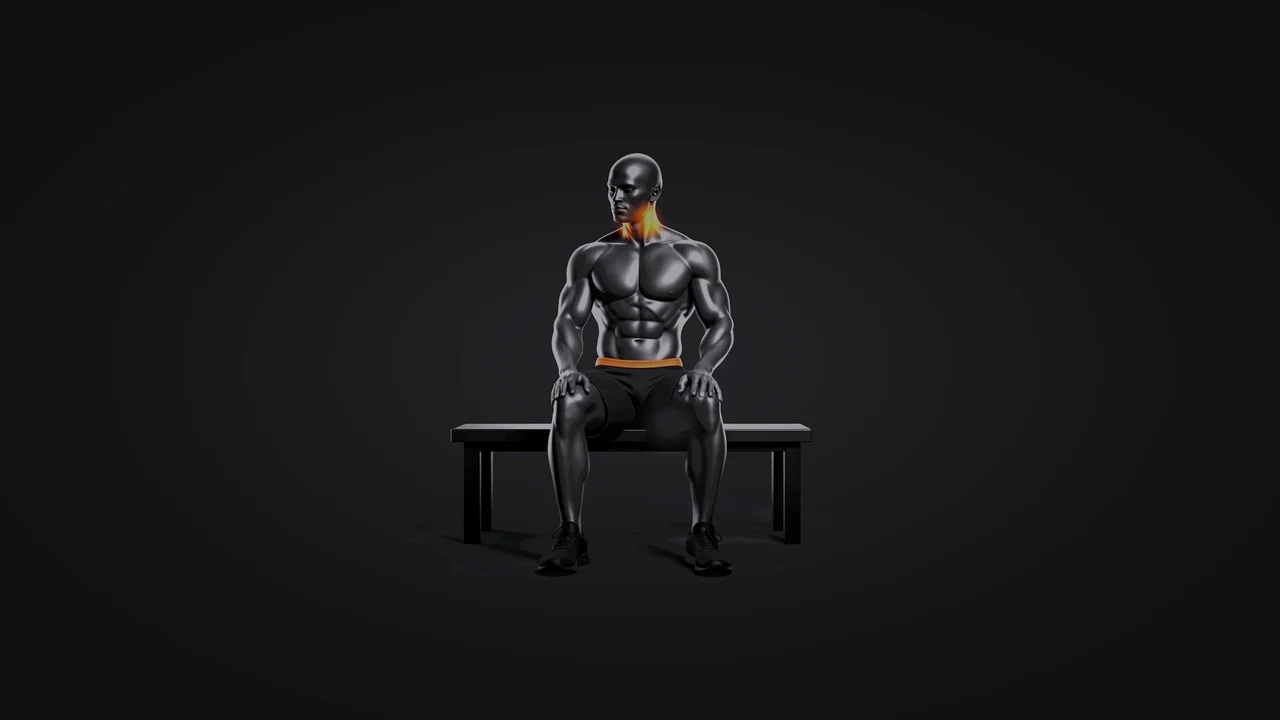
  • Demo still: neck warm-up.
    • Neck · Warm-up
    • Bodyweight
    • Home + gym

    Neck warm-up

    1. Sit or stand tall.
    2. Slow nods: look down, then back to level.
    3. Slow turns, left and right.
    4. Slow tilts, ear toward shoulder. Pain-free range only.

    Safety: Neck block: only when your safety answers leave it on and you didn't train your neck the day before. Steady breathing, no straining. Never to failure.

    Common mistakes
    • Rolling the head in circles.
    • Forcing the end of the range.

    Swap for: chin tucks.
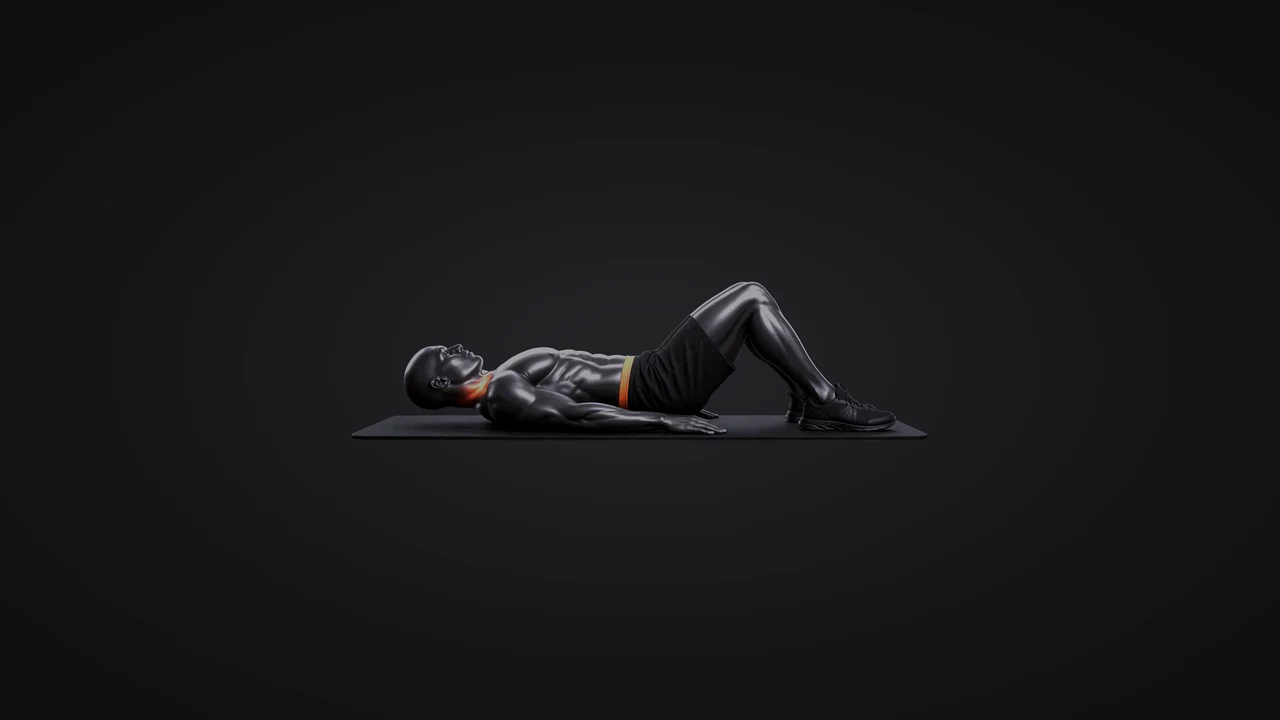
  • Demo still: neck flexion hold.
    • Neck · Front of the neck
    • Bodyweight
    • Home + gym

    Neck flexion hold

    1. Lie on your back, knees bent (in the gym, on a bench with your head just off the end).
    2. Tuck your chin as if nodding yes.
    3. Lift your head just off the floor and hold, chin still tucked.
    4. Breathe steadily, then lower gently.

    Safety: Neck block: only when your safety answers leave it on and you didn't train your neck the day before. Steady breathing, no straining. Never to failure. Stops at 20 s in every phase: the next step is the seated hand-resisted version, never a longer hold. Stop before the chin pokes or the head shakes. Easier version: seated, hand on forehead, gentle push.

    Common mistakes
    • Chin poking up toward the ceiling.
    • Holding your breath.
    • Pushing past about half effort.

    Swap for: seated neck flexion hold (hand), neck hand hold.

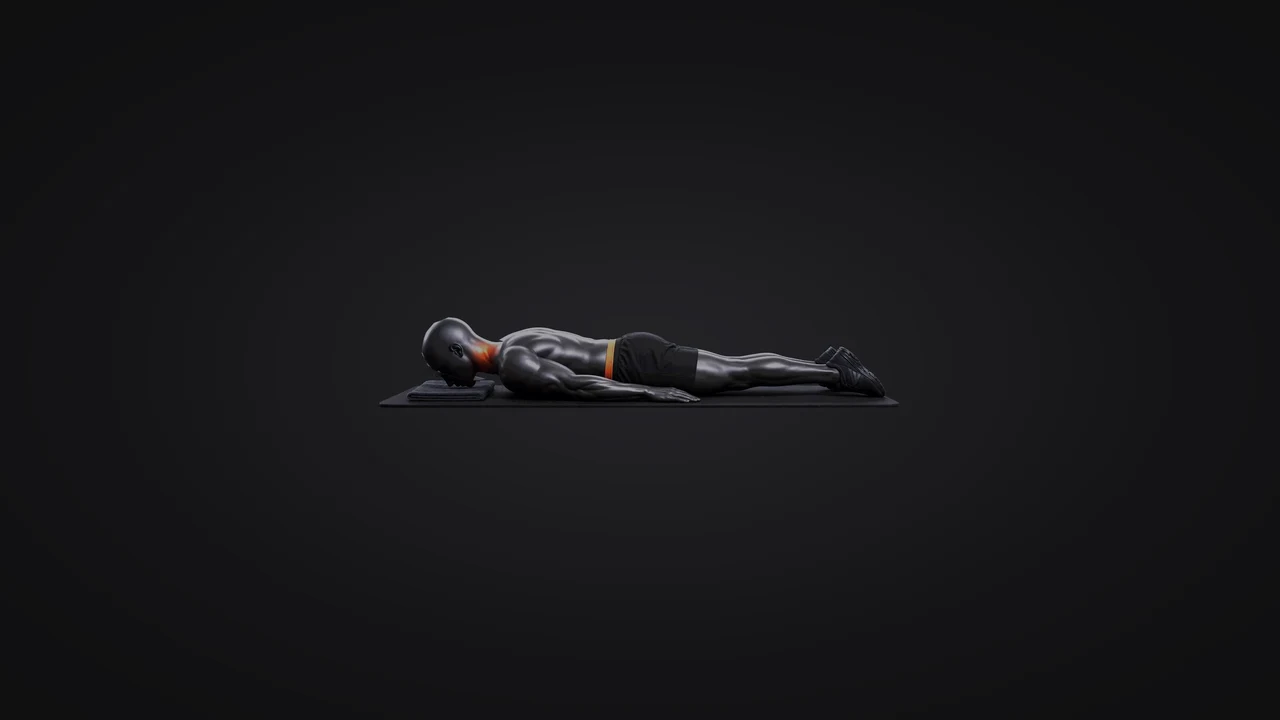
  • Demo still: neck extension hold.
    • Neck · Back of the neck
    • Bodyweight
    • Home + gym

    Neck extension hold

    1. Lie face down, forehead on a folded towel (in the gym, on a bench).
    2. Tuck your chin slightly.
    3. Lift your head until it's level with your spine and hold.
    4. Breathe steadily, then lower gently.

    Safety: Neck block: only when your safety answers leave it on and you didn't train your neck the day before. Steady breathing, no straining. Never to failure. Easier version: on all fours, or seated with hands behind the head, pushing back gently.

    Common mistakes
    • Cranking the head up to look forward.
    • Holding your breath.

    Swap for: seated neck extension hold (hand), neck hand hold.

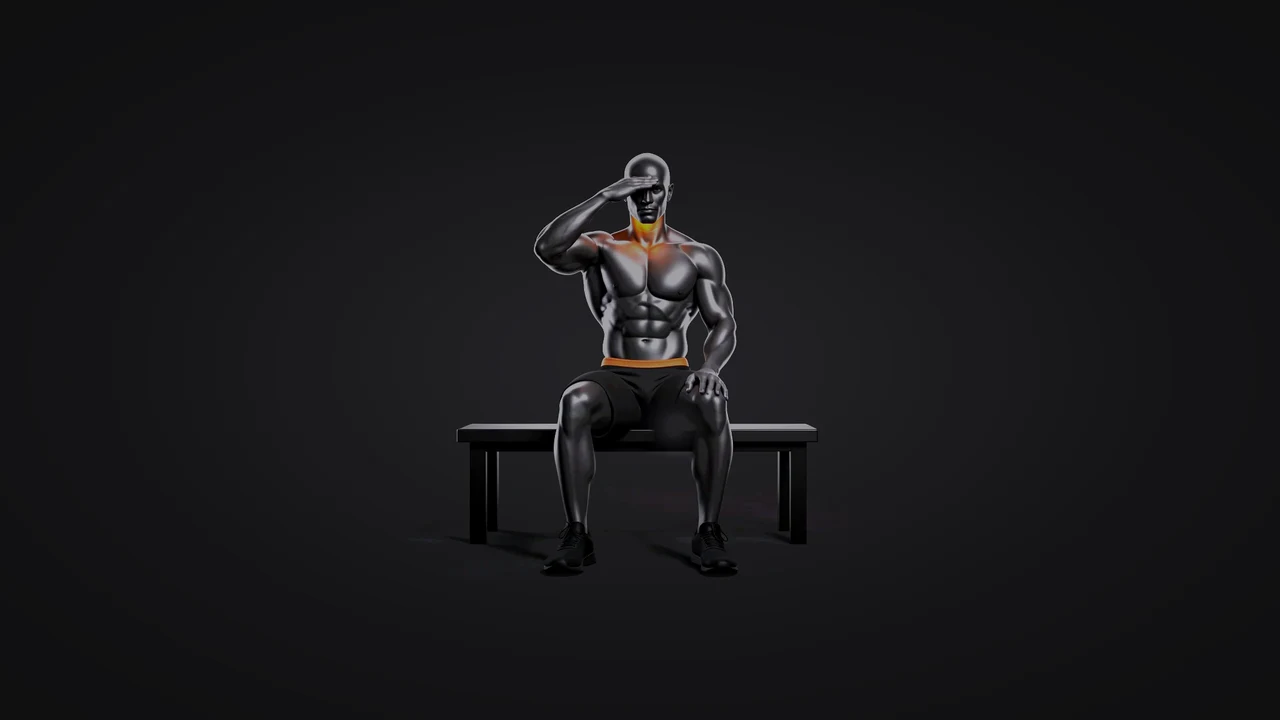
  • Demo still: seated neck flexion hold (hand).
    • Neck · Front of the neck
    • Bodyweight
    • Home + gym

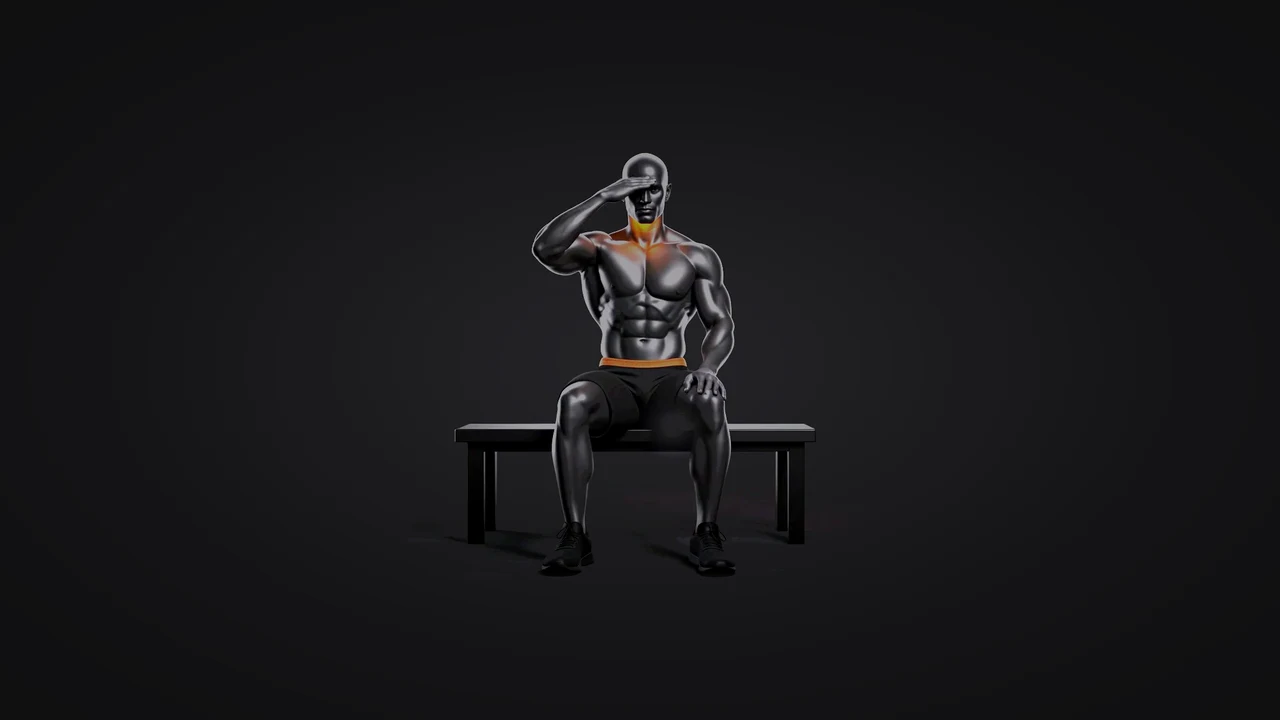
    Seated neck flexion hold (hand)

    1. Sit tall on a chair or bench, chin level.
    2. Put the heel of your hand on your forehead.
    3. Tuck your chin a little and push your head gently forward into your hand. Nothing moves.
    4. Hold, breathing steadily, then relax.

    Safety: Neck block: only when your safety answers leave it on and you didn't train your neck the day before. Steady breathing, no straining. Never to failure. The seated version of the lying flexion hold, for anyone who'd rather not lie on the floor. Stops at 20 s.

    Common mistakes
    • Pushing hard: about half effort.
    • Holding your breath.

    Swap for: neck flexion hold, neck hand hold.

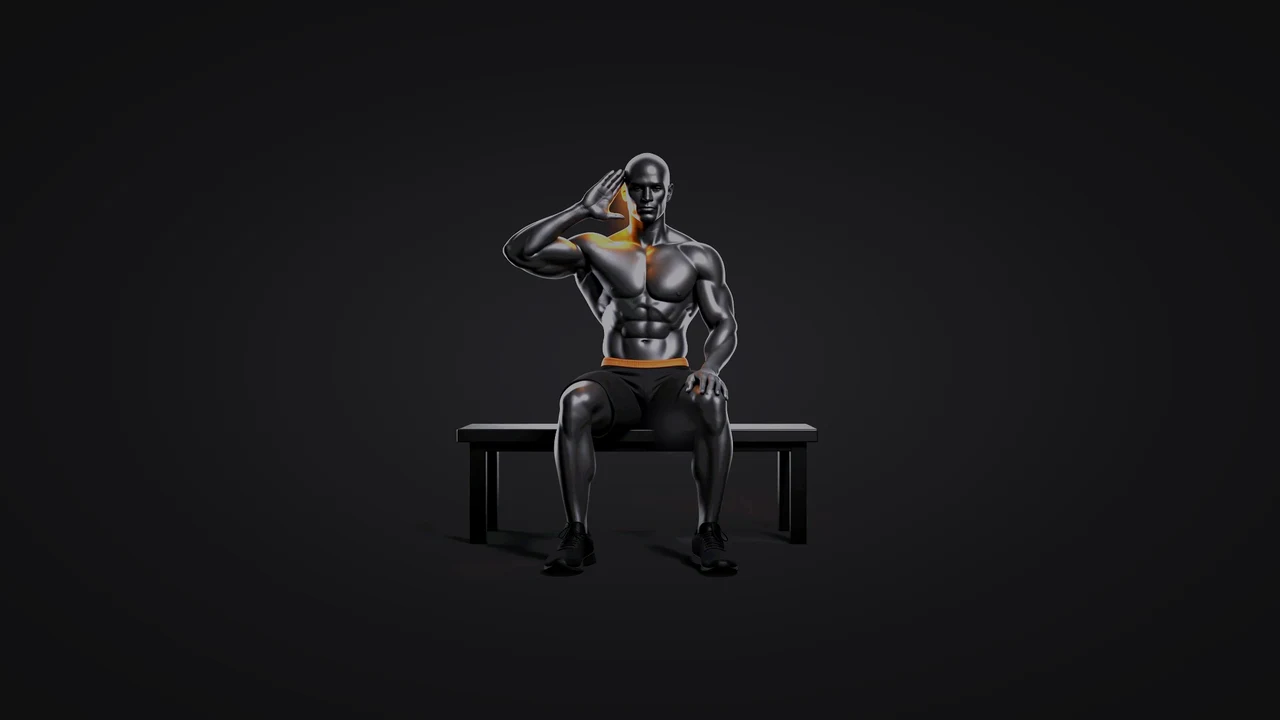
  • Demo still: neck side hold.
    • Neck · Sides of the neck
    • Bodyweight
    • Home + gym

    Neck side hold

    1. Sit tall and put your hand on the side of your head, above the ear.
    2. Push your head gently into your hand; your hand pushes back.
    3. Nothing moves. Hold, breathing steadily.
    4. Switch sides.

    Safety: Neck block: only when your safety answers leave it on and you didn't train your neck the day before. Steady breathing, no straining. Never to failure.

    Common mistakes
    • Pushing hard: about half effort is the target.
    • Tilting the head.

    Swap for: neck hand hold, neck flexion hold.

  • Demo still: neck hand hold.
    • Neck · All four directions
    • Bodyweight
    • Home + gym

    Neck hand hold

    1. Sit tall, chin level.
    2. Put your hand on your forehead and push your head gently into it. Nothing moves. Hold.
    3. Then the back of your head, then each side: all four directions every set.
    4. Breathe steadily throughout.

    Safety: Neck block: only when your safety answers leave it on and you didn't train your neck the day before. Steady breathing, no straining. Never to failure.

    Common mistakes
    • Pushing hard.
    • Letting the head drift.

    Swap for: neck flexion hold, neck extension hold, neck side hold, seated neck flexion hold (hand).

No coach has checked these numbers yet

What 12 weeks can change

What published studies found, in plain numbers. They studied adults, so read them as a rough guide, not a promise.

Direct neck work

About +0.4 cm

In a 12-week trial, neck extension training grew neck muscle by 12.8 %. Converted roughly, that's about 0.4 cm of neck circumference.

Conley 1997, Eur J Appl Physiol

Lifting, no neck work

No change

In the same trial, people who lifted without neck work saw no neck growth, even though their legs grew.

Conley 1997, Eur J Appl Physiol

Leaning out

About −0.15 cm per kg

Your neck loses a little as you lose fat: about 0.15 cm for each kg of fat lost.

Foulis 2023, Front Physiol

So a neck that grows in 12 weeks needs direct neck work, and the change is small next to the noise of a photo scan.

If you're 16 or 17, the app sets no calorie deficit and shows no projections.

Read the full guide: what 12 weeks can change

Train your neck safely

  • Neck work only when your safety answers leave it on, and never on two days in a row.

  • About half effort, steady breathing, no straining. Never to failure.

  • Stop before your chin pokes or your head shakes.

  • Stop at once for numbness, dizziness or a sudden bad headache. If it's sudden or severe, call emergency services. Otherwise, see a doctor before you train your neck again.

  • Under 18: holds and chin tucks only, two days a week at most. No weights, bands or curls.

General guidance, not medical advice.

Find your weakest zone in the app

Three photos measure your shoulders, waist and posture. Your 12-week plan starts with the zone that needs it most.

Coming soon to the App Store

iPhone · Ages 16+ · Scores are an AI estimate, not medical advice.