Zone guide

Shoulders

Shoulder width is bone plus delts. The bone is set. The delts are the part you can build.

Side delts add width up top. Here's what they do for your V, how the app measures them, and four moves that train them.

What sets your shoulder width
Bone Your shoulder bones (biacromial width). Set by your skeleton; training doesn't change it.
Delts Muscle on the outside of the bone. The part you build.
Shoulder width What the scan measures, over your waist.

What shoulders do for your V

A V-taper is the angle from your shoulders down to your waist. Shoulders are the top of it: the wider they are next to your waist, the sharper the angle.

Side delts sit on the outside of the shoulder bone, so they're what adds width. Rear delts fill out the back view and help hold your shoulders back. Pressing builds the whole shoulder.

How the app measures it

From your scan photos, the app finds your shoulder landmarks and body outline and measures your shoulder width. A fixed formula turns it into a shoulder score from 0 to 100. The same photo always gives the same score.

Shoulder width is one half of your taper ratio: shoulder width over waist width. Every scan has some noise, so one week's change never counts. A trend appears once you have several scans.

How the score works

Moves that build shoulders

Four of the 19 shoulder exercises in the app. In the app each one has a demo clip, and your plan sets the sets and reps for you.

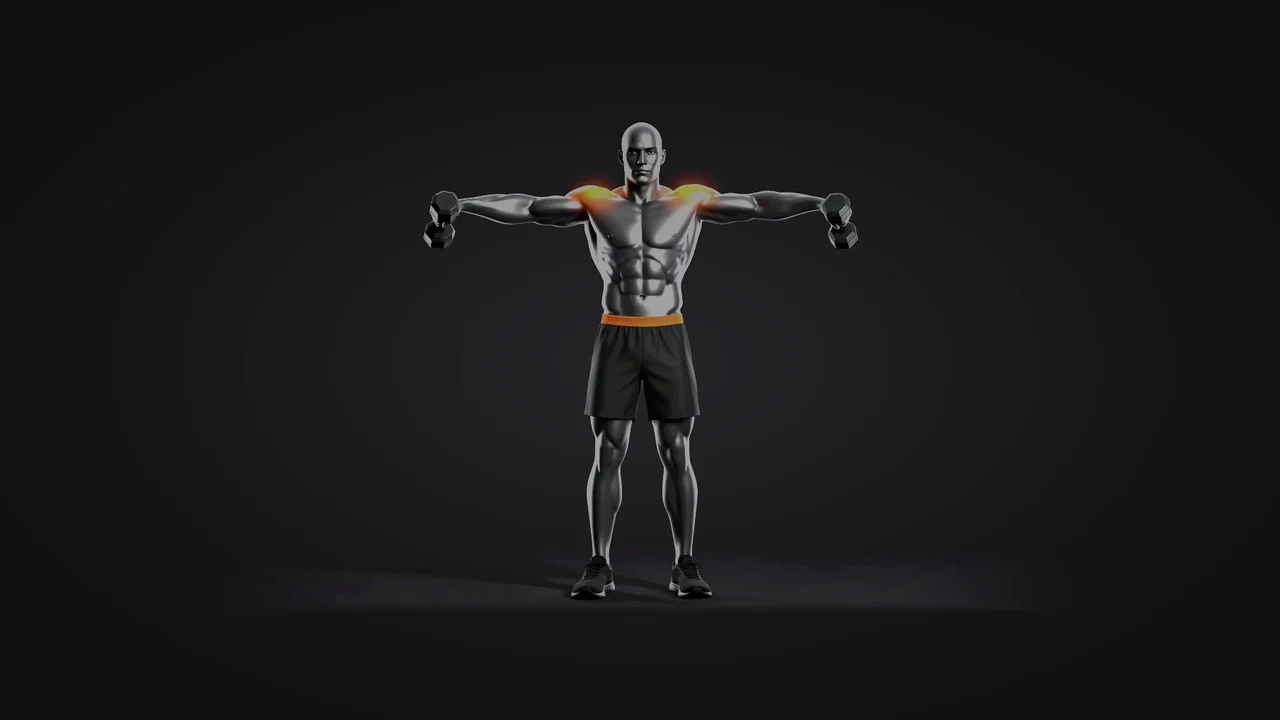
  • Demo still: dumbbell lateral raise.
    • Shoulders · Side delts
    • Dumbbell
    • Home + gym

    Dumbbell lateral raise

    1. Stand tall, dumbbells at your sides, a slight bend in the elbows.
    2. Raise your arms out to the side and a little forward, to shoulder height.
    3. Lead with the elbows; thumbs level or slightly up.
    4. Lower over about 2 seconds.

    Safety: Raise slightly forward of the side (scapular plane) and stop at shoulder height. A pinch at the top: stop lower.

    Common mistakes
    • Swinging the weight up with the hips.
    • Shrugging: shoulders stay down, away from the ears.
    • Raising above shoulder height.

    Swap for: band lateral raise, cable lateral raise, machine lateral raise, lean-away lateral raise.
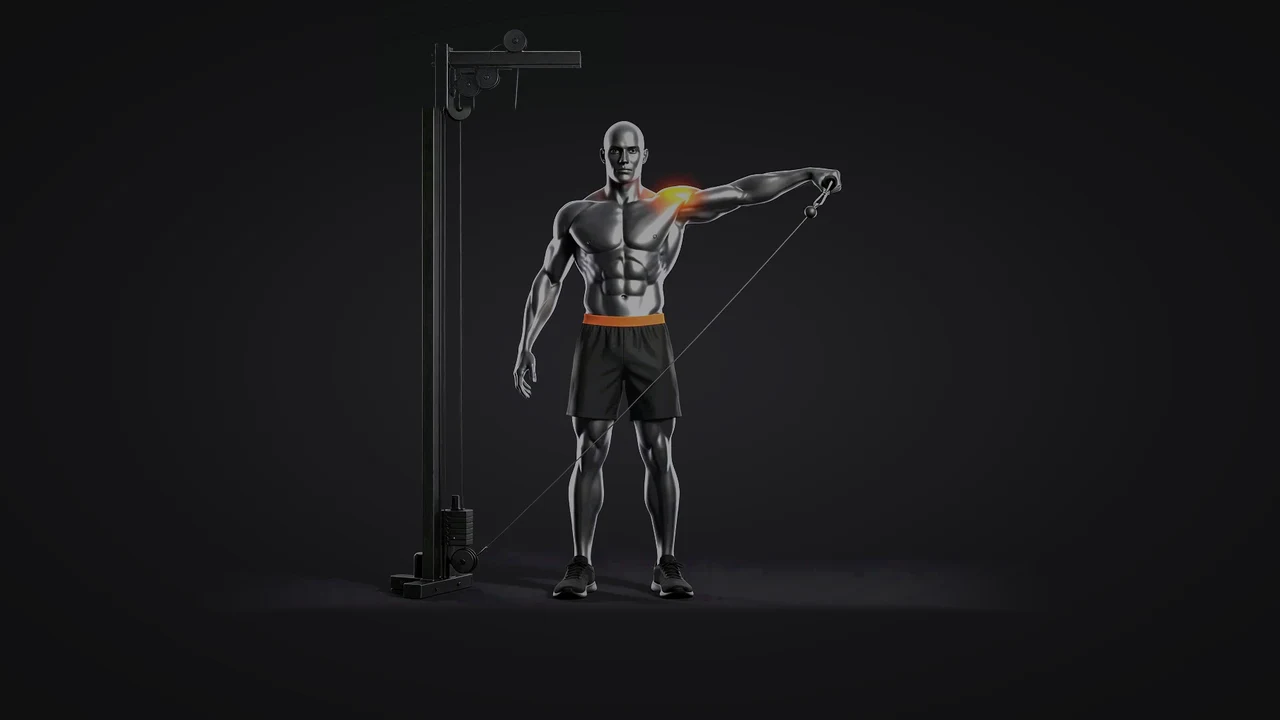
  • Demo still: cable lateral raise.
    • Shoulders · Side delts
    • Cable
    • Gym

    Cable lateral raise

    1. Set the pulley at its lowest point and take the handle in the far hand.
    2. Stand side-on, the cable crossing in front of you.
    3. Raise the arm out to the side to shoulder height.
    4. Lower slowly until the stack nearly touches. Do all reps, then switch sides.

    Safety: Raise slightly forward of the side (scapular plane) and stop at shoulder height. A pinch at the top: stop lower.

    Common mistakes
    • Turning the torso to lift.
    • Bending the elbow more as you tire.

    Swap for: dumbbell lateral raise, machine lateral raise, band lateral raise.

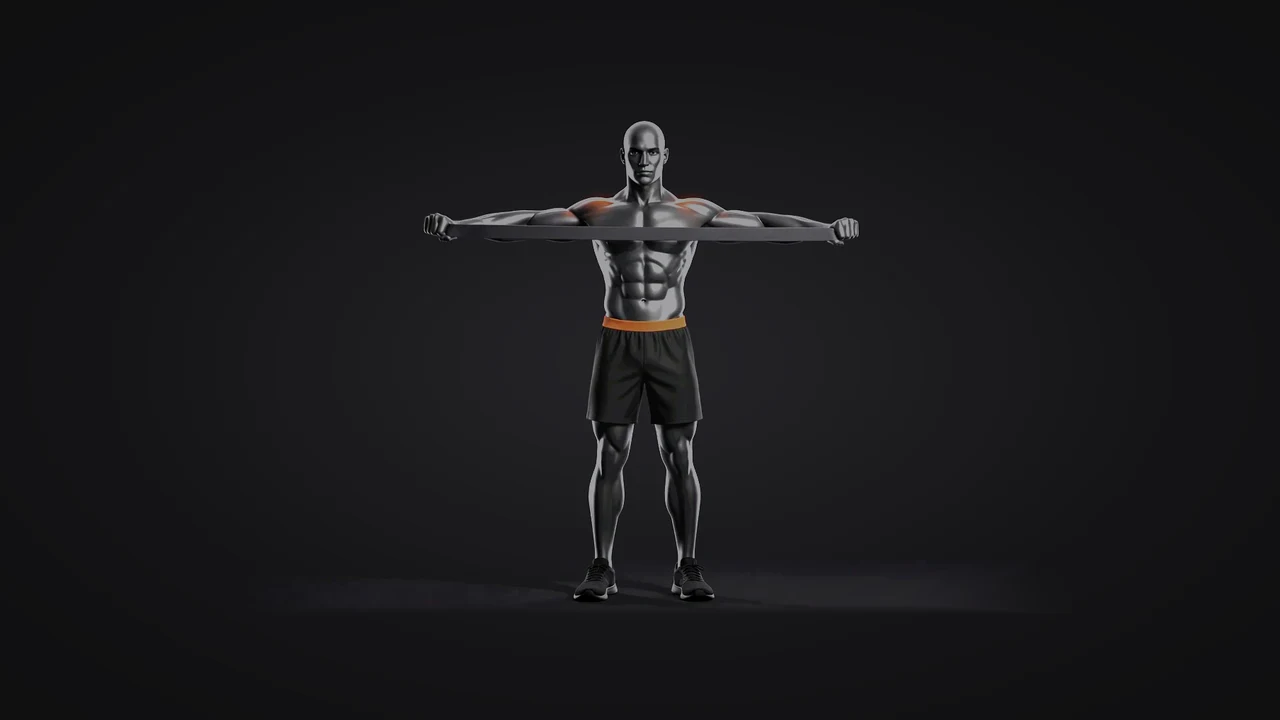
  • Demo still: band pull-apart.
    • Shoulders · Rear delts
    • Band
    • Home + gym

    Band pull-apart

    1. Hold the band at shoulder width, arms straight out in front at chest height.
    2. Pull the band apart until it touches your chest.
    3. Keep the arms nearly straight and the ribs down.
    4. Return slowly.

    Safety: Band check first: no nicks or tears, anchor secure, the band's line never aimed at your face.

    Common mistakes
    • Arching the back.
    • Bending the elbows to make it easier.

    Swap for: dumbbell rear-delt fly, cable rear-delt fly, reverse pec deck.

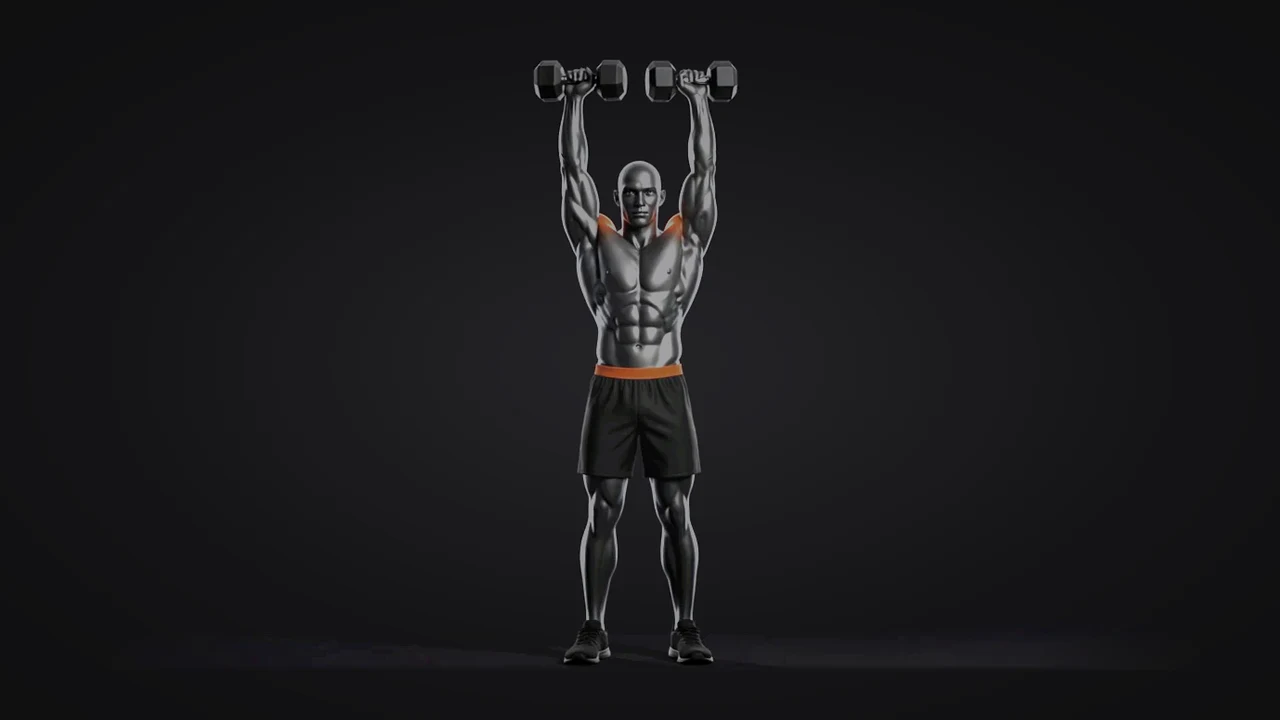
  • Demo still: dumbbell shoulder press.
    • Shoulders · Pressing
    • Dumbbell
    • Home + gym

    Dumbbell shoulder press

    1. Sit or stand tall, dumbbells at shoulder height, palms forward or facing in.
    2. Brace your middle.
    3. Press up until the arms are straight, dumbbells over the shoulders.
    4. Lower slowly back to shoulder height.

    Safety: Only if you can raise your arms overhead without pain. If pressing overhead pinches, use the landmine press.

    Common mistakes
    • Arching the back as the set gets hard.
    • Lowering only halfway.

    Swap for: barbell overhead press, machine shoulder press, kettlebell overhead press, landmine press.

No coach has checked these numbers yet

What 12 weeks can change

What published studies found, in plain numbers. They studied adult men, so read them as a rough guide, not a promise.

Shoulder bone

No change

Biacromial width is bone. Adults don't change it with training.

Delts

About ±0.3 cm

In the one direct trial, trained lifters doing lateral raises added about 0.5 to 1 mm of side-delt thickness per side in 8 weeks. Fat over the delt shrinks as you lean out, so shoulder width nets out near ±0.3 cm. That's smaller than a photo scan can see.

Larsen 2025, Front Physiol · Poland 1997, JAMA

Waist

1.0 to 1.2 cm per kg

The part that moves. Average and heavier men lost about 1.0 to 1.2 cm of waist for each kg of fat they lost.

Hunt 2014, Lancet · Foulis 2023, Front Physiol

So over 12 weeks, your taper ratio moves mostly through your waist. Shoulders build over several cycles.

If you're 16 or 17, the app sets no calorie deficit and shows no projections.

Read the full guide: what 12 weeks can change

Train shoulders safely

  • Raise slightly forward of your sides (the scapular plane) and stop at shoulder height. A pinch at the top: stop lower.

  • Press overhead only if you can raise your arms overhead without pain. If pressing overhead pinches, use the landmine press.

  • Band check first: no nicks or tears, anchor secure, the band's line never aimed at your face.

  • Stop at any sharp pain, or numbness or tingling that spreads into your arm. Pain that keeps coming back is worth a physio's eyes.

General guidance, not medical advice.

Find your weakest zone in the app

Three photos measure your shoulders, waist and posture. Your 12-week plan starts with the zone that needs it most.

Coming soon to the App Store

iPhone · Ages 16+ · Scores are an AI estimate, not medical advice.