Zone guide

Lats

Lats are the big muscles down the sides of your back. They fill in the V between your shoulders and your waist.

Back width carries the V down your sides. Here's what lats do for your V, how the app estimates them, and six moves that train them.

What lats do for your V

From the front, your lats are the line from under your arms down to your waist. The wider your back next to your waist, the clearer that line.

Pull-ups and pulldowns train the lats through their full length. Rows add thickness across the back and train the muscles that hold your shoulder blades. Straight-arm pulldowns work the lats on their own.

How the app measures it

The scan can't see your lats directly from the front. It estimates them from the angle of the line your outline makes from your shoulders down to your waist, so a smaller waist moves the lat score too.

That makes it one of the scores that moves most between scans. Read one scan's lat score as rough, and watch how it moves over several.

How the score works

Moves that build lats

Six of the 20 lat exercises in the app. In the app each one has a demo clip, and your plan sets the sets and reps for you.

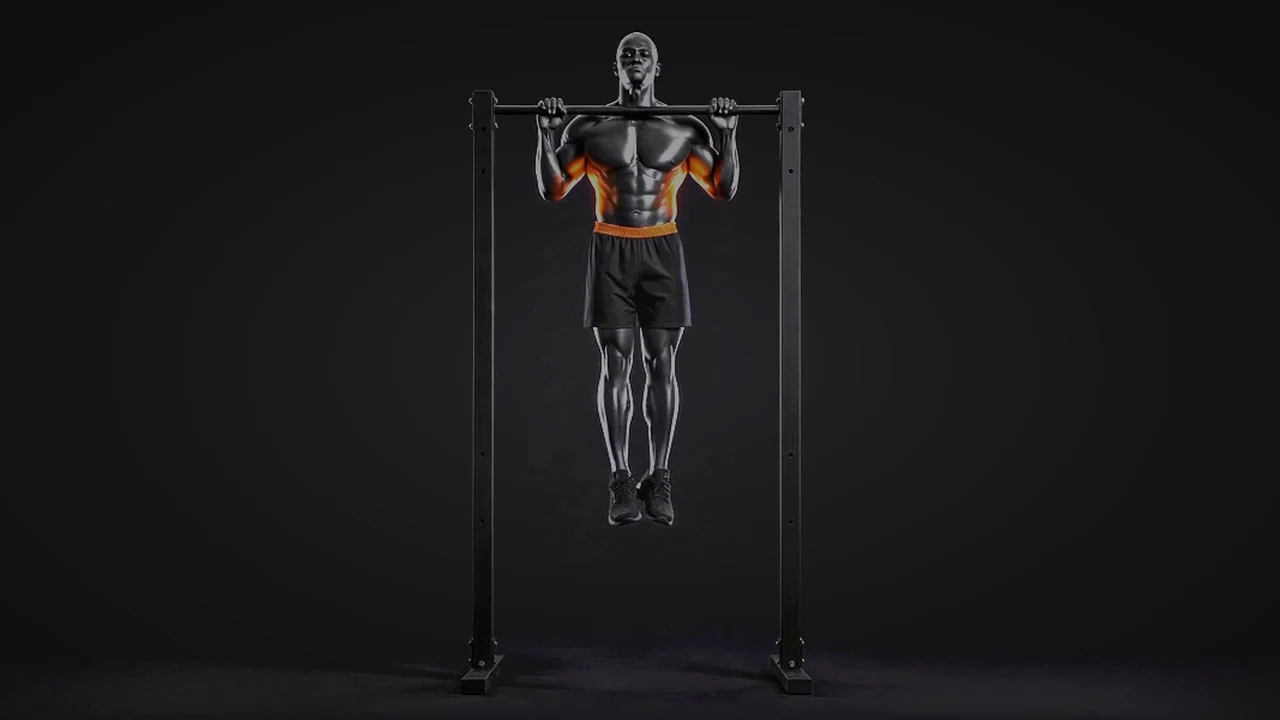
  • Demo still: pull-up.
    • Lats · Vertical pull
    • Bodyweight + pull-up bar
    • Home + gym

    Pull-up

    1. Hang from the bar, hands a little wider than your shoulders, palms facing away.
    2. Pull your shoulders down, then pull your chest toward the bar.
    3. Get your chin over the bar.
    4. Lower all the way to straight arms under control.

    Safety: Shoulder discomfort: try a neutral grip (palms facing each other) or the pulldown.

    Common mistakes
    • Half reps: go to straight arms every time.
    • Kicking or swinging.
    • Craning the neck to get the chin over.

    Swap for: chin-up, band-assisted pull-up, lat pulldown, negative pull-up.
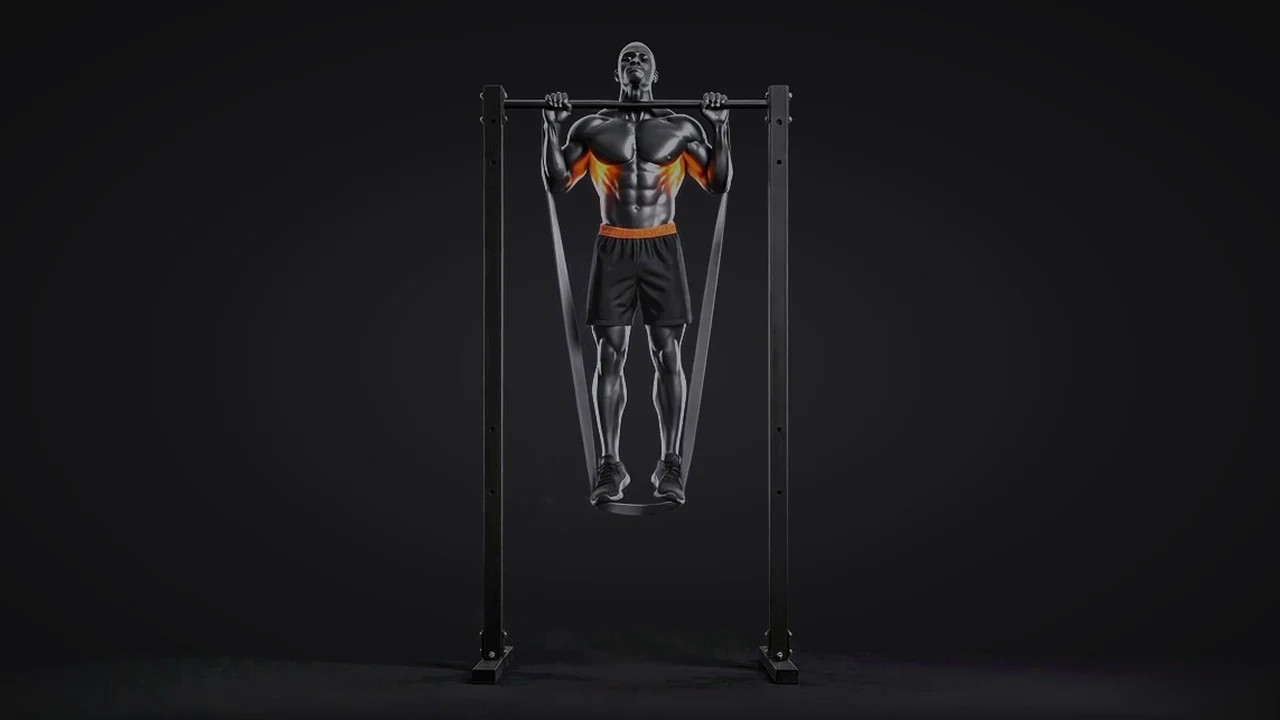
  • Demo still: band-assisted pull-up.
    • Lats · Vertical pull
    • Band + pull-up bar
    • Home + gym

    Band-assisted pull-up

    1. Loop a band over the bar and pull it through itself.
    2. Put a knee or both feet in the loop and hang with straight arms.
    3. Pull your chest toward the bar, chin over.
    4. Lower slowly to straight arms.

    Safety: Band check first: no nicks or tears, anchor secure, the band's line never aimed at your face.

    Common mistakes
    • Bouncing out of the bottom on the band.
    • A band so strong the last reps feel easy.

    Swap for: negative pull-up, assisted pull-up machine, pull-up, band pulldown.

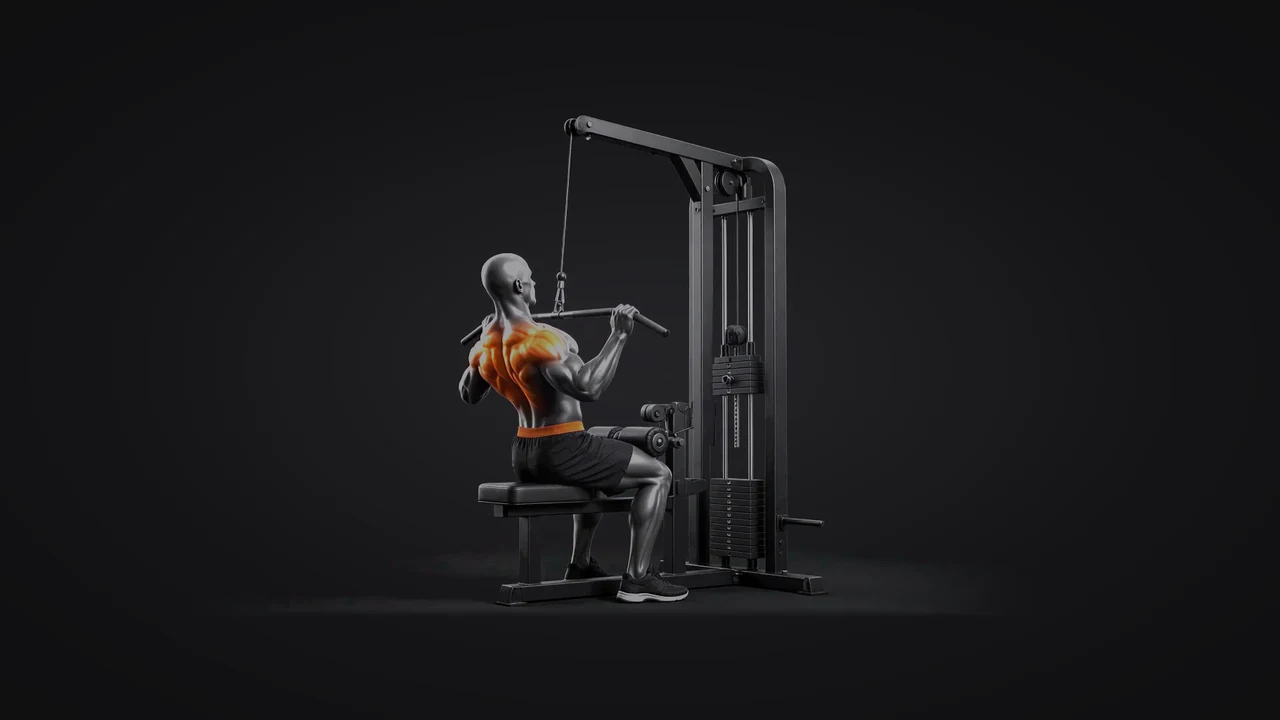
  • Demo still: lat pulldown.
    • Lats · Vertical pull
    • Cable
    • Gym

    Lat pulldown

    1. Set the thigh pad so your legs are locked in.
    2. Take the bar a little wider than your shoulders.
    3. Pull the bar to your upper chest, elbows down and back.
    4. Let it rise slowly until your arms are straight.

    Safety: Always to the front, never behind the neck.

    Common mistakes
    • Pulling behind the neck.
    • Leaning far back to move more weight.
    • Shoulders shrugging up at the top.

    Swap for: neutral-grip pulldown, single-arm cable pulldown, assisted pull-up machine, pull-up.

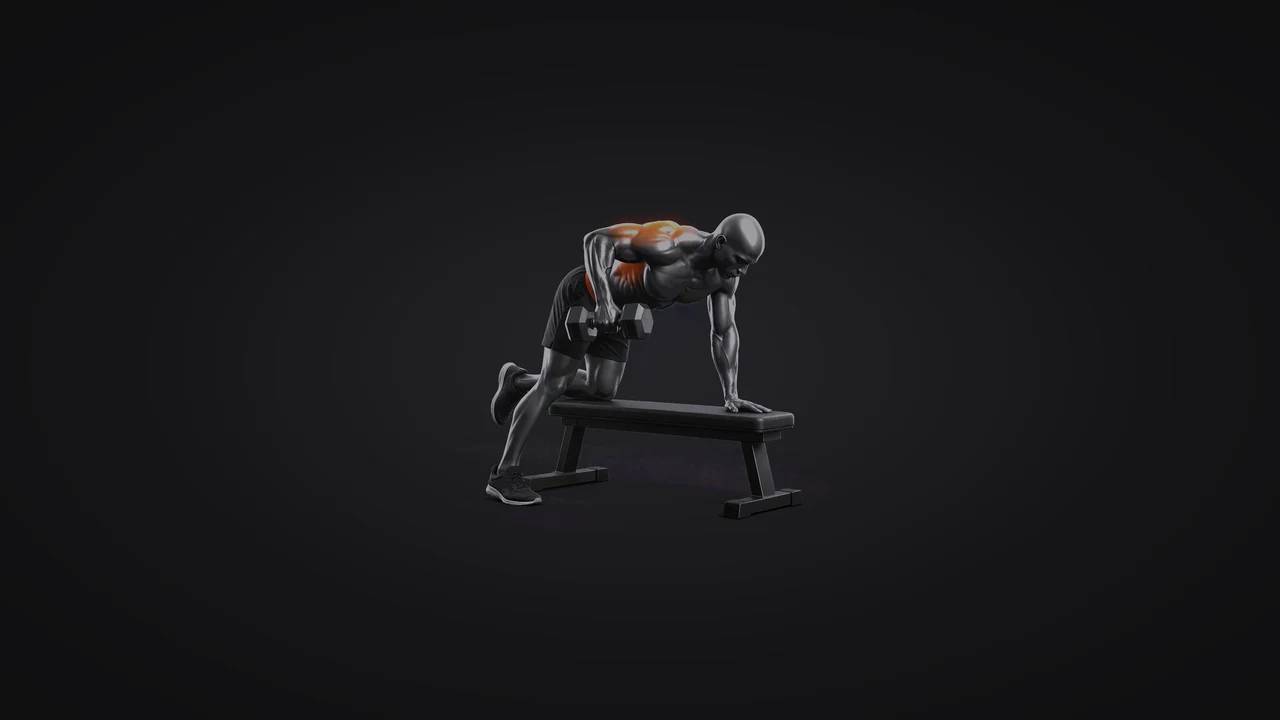
  • Demo still: one-arm dumbbell row.
    • Lats · Rows
    • Dumbbell
    • Home + gym

    One-arm dumbbell row

    1. Put one hand and knee on a bench (or one hand on a sturdy chair), back flat.
    2. Let the dumbbell hang below your shoulder.
    3. Pull it toward your hip, elbow close to your body.
    4. Lower slowly to a full stretch. Do all reps, then switch sides.
    Common mistakes
    • Twisting the torso to lift.
    • Jerking the weight up.

    Swap for: chest-supported dumbbell row, kettlebell row, seated cable row, band seated row.

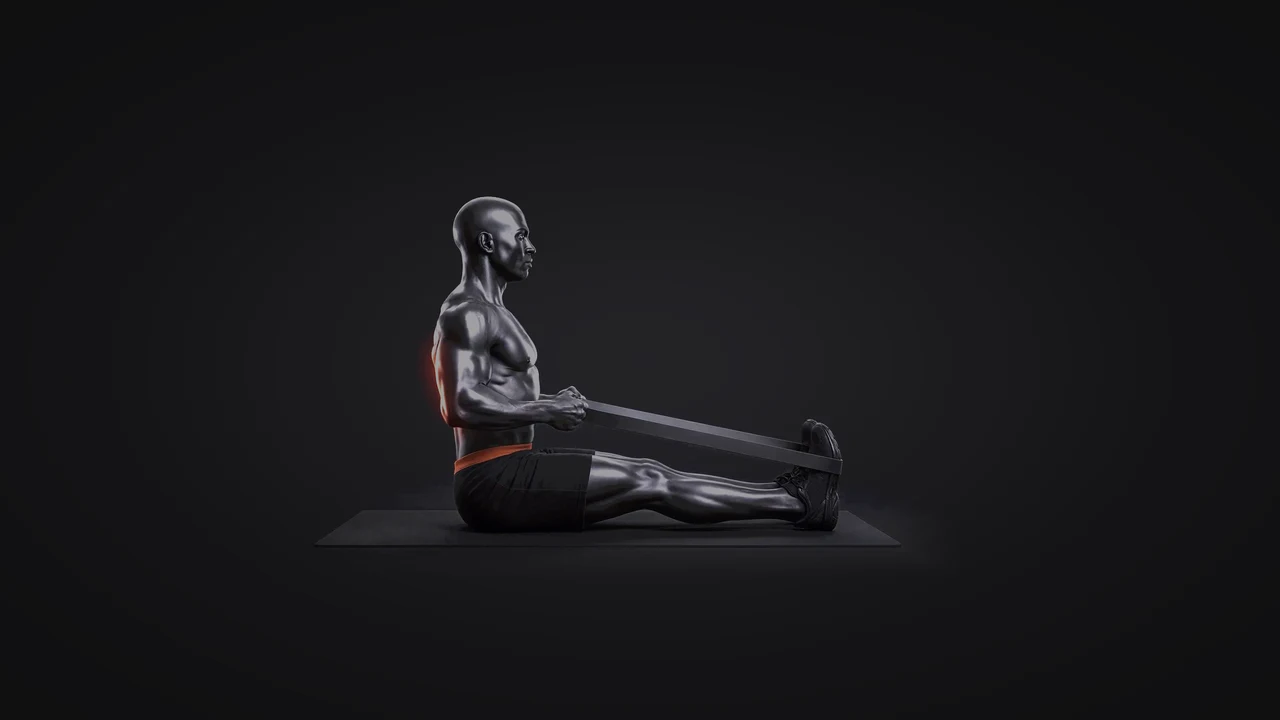
  • Demo still: band seated row.
    • Lats · Rows
    • Band
    • Home

    Band seated row

    1. Sit with your legs straight and the band looped around your feet.
    2. Sit tall, arms long, band taut.
    3. Pull your hands to your lower ribs, elbows close.
    4. Return slowly.

    Safety: Band check first: no nicks or tears, anchor secure, the band's line never aimed at your face.

    Common mistakes
    • Leaning back to finish the rep.
    • Band loose on the feet: wrap it twice so it can't slip.

    Swap for: seated cable row, one-arm dumbbell row, kettlebell row.

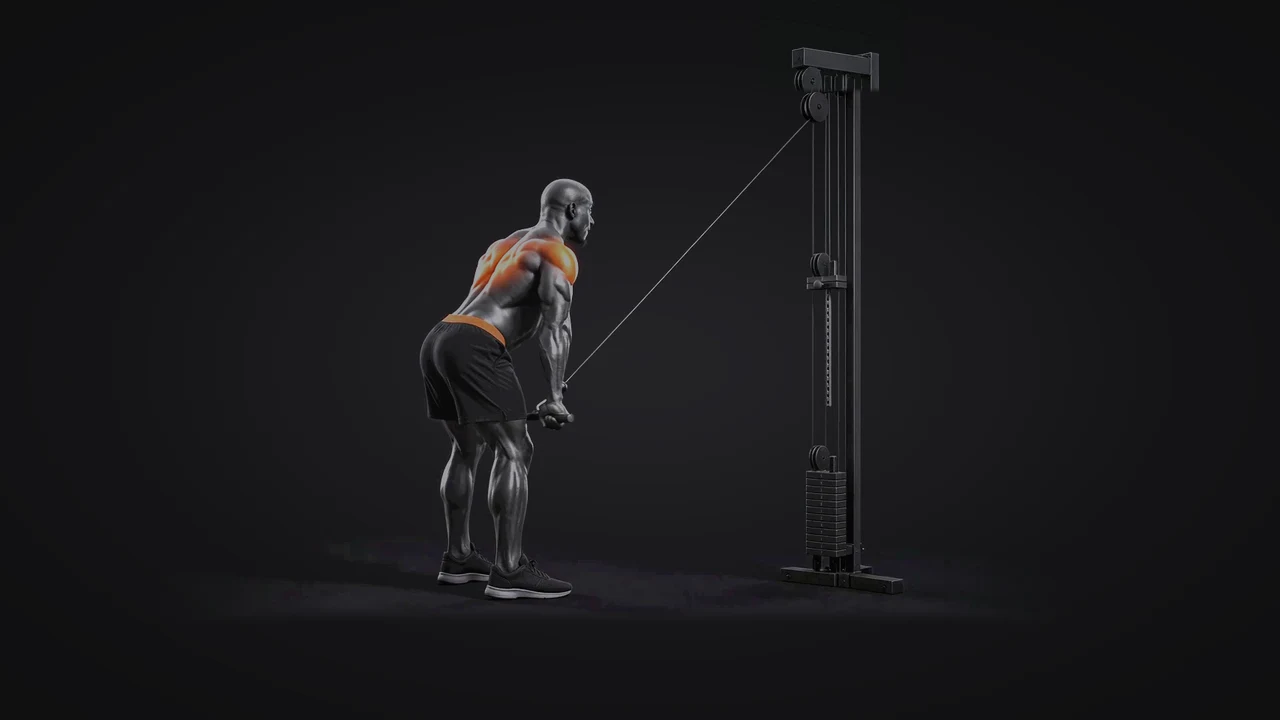
  • Demo still: straight-arm pulldown.
    • Lats · Straight-arm
    • Cable
    • Gym

    Straight-arm pulldown

    1. Set a bar or rope at the top of the cable.
    2. Step back and hinge slightly forward, arms long, ribs down.
    3. Sweep the bar down to your thighs with straight arms.
    4. Let it rise slowly to head height.
    Common mistakes
    • Bending the elbows into a pushdown.
    • Rocking the torso.

    Swap for: band straight-arm pulldown, dumbbell pullover, single-arm cable pulldown.

No coach has checked these numbers yet

What 12 weeks can change

What published studies found, in plain numbers. They studied adult men, so read them as a rough guide, not a promise.

Lat growth

No study yet

We found no completed training study that measured lat growth, so there's no honest number to give you.

Muscle, whole body

About 0.6 kg a month

Across 111 studies, mostly untrained men gained about 1.6 kg of lean mass in about 10 weeks of lifting. Expect less if you've trained for years.

Benito 2020, Int J Environ Res Public Health

Waist

1.0 to 1.2 cm per kg

The part that moves. Average and heavier men lost about 1.0 to 1.2 cm of waist for each kg of fat they lost.

Hunt 2014, Lancet · Foulis 2023, Front Physiol

So over 12 weeks, the line from your shoulders to your waist changes mostly at the waist end. Back width builds over several cycles.

If you're 16 or 17, the app sets no calorie deficit and shows no projections.

Read the full guide: what 12 weeks can change

Train lats safely

  • Pull to the front, never behind the neck.

  • Shoulder discomfort on pull-ups: try a neutral grip (palms facing each other) or the pulldown.

  • Band check first: no nicks or tears, anchor secure, the band's line never aimed at your face.

  • Stop at any sharp pain, or numbness or tingling that spreads into your arm. Pain that keeps coming back is worth a physio's eyes.

General guidance, not medical advice.

Find your weakest zone in the app

Three photos measure your shoulders, waist and posture. Your 12-week plan starts with the zone that needs it most.

Coming soon to the App Store

iPhone · Ages 16+ · Scores are an AI estimate, not medical advice.